

คลิกเพื่ออ่านบทความฉบับภาษาไทย
In the world of investing, some spend a vast amount of time chasing high-growth stocks and the latest trends. Yet, robust risk-adjusted returns can come from “boring” and mature companies sitting right in front of us. In Thailand, Thai President Foods PCL (TFMAMA) is a great example.
TFMAMA ranks 42 out of 250 Uncovered Thai Stocks.
While its ticker might seem obscure to those outside the Thai capital markets, its flagship product, “Mama,” is a cultural and economic staple so ubiquitous that its name is often used as a generic term for instant noodles. Despite this, TFMAMA remains uncovered by major banks and research houses due to its low trading volume—creating a potential opportunity for the diligent retail investor.
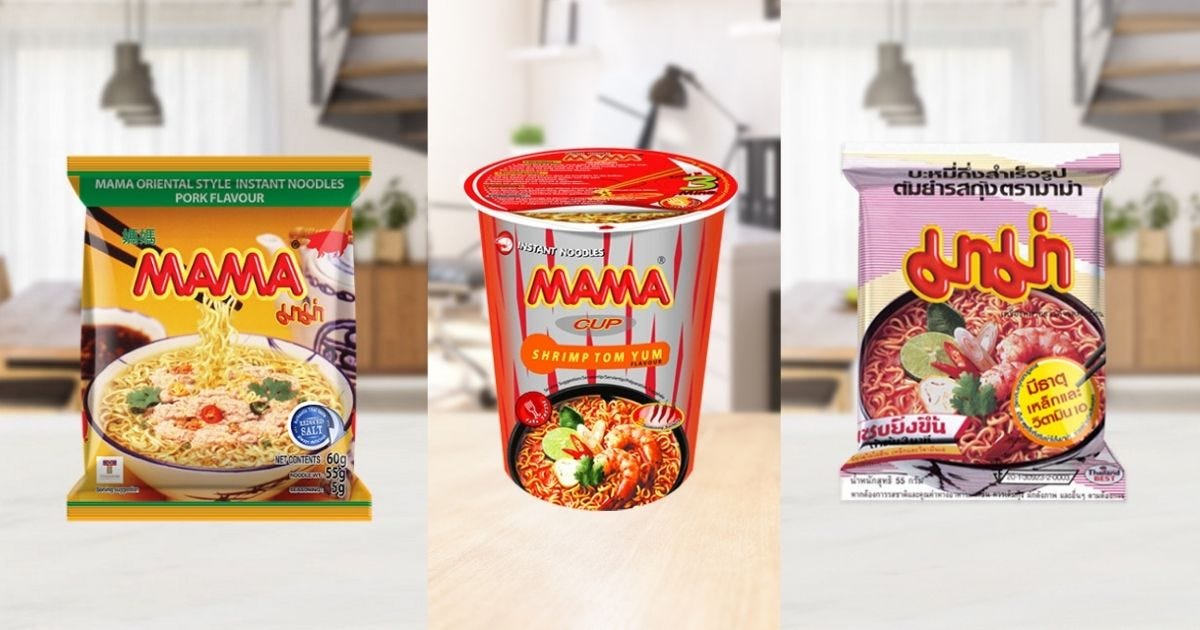
Business Overview: More Than Just a Noodle
TFMAMA is the dominant force in the Thai instant noodle market, boasting a domestic market share of around 50% in pack- and cup-type noodle categories and close to 60% in instant rice noodles. Founded in 1972, the company has evolved from a local manufacturer into a global food powerhouse.
The flagship “Mama” instant noodle brand is the heart of the business. The company operates five major factories in Thailand (Si Racha, Lamphun, Rayong, and two in Ratchaburi), with production capacity exceeding 6 million packs per day.
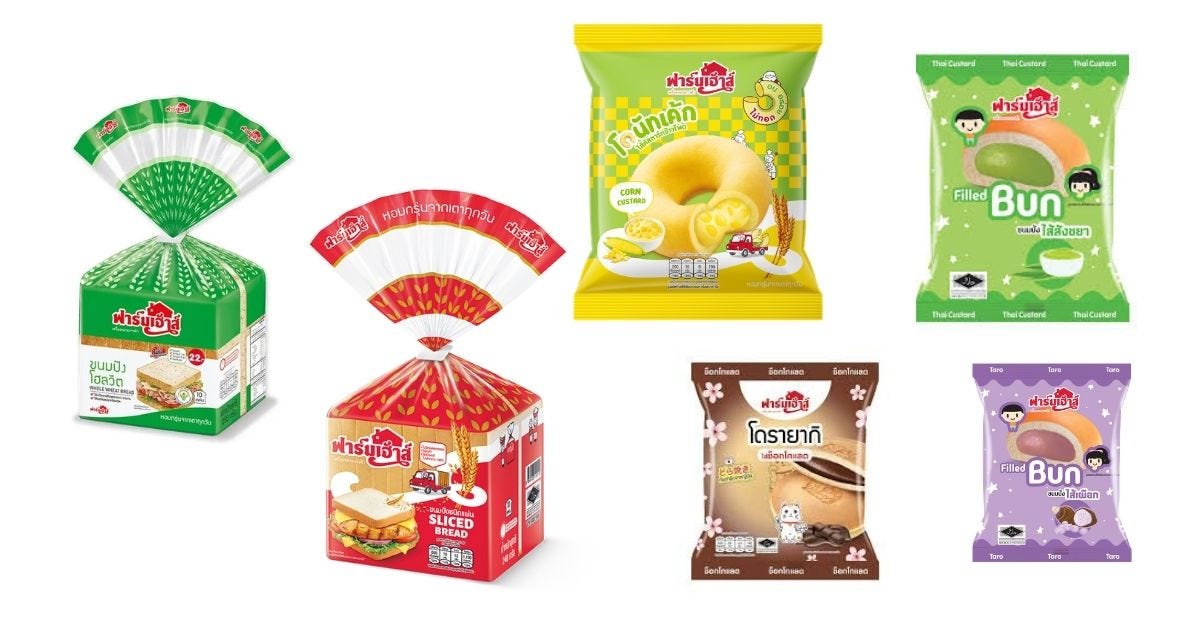
Crucially, TFMAMA is not a pure-play noodle company. It owns a majority stake in President Bakery PCL (PB), the manufacturer of “Farmhouse” bread, which holds the top spot in Thailand’s wholesale bakery market. This vertical and horizontal integration provides a massive defensive moat.
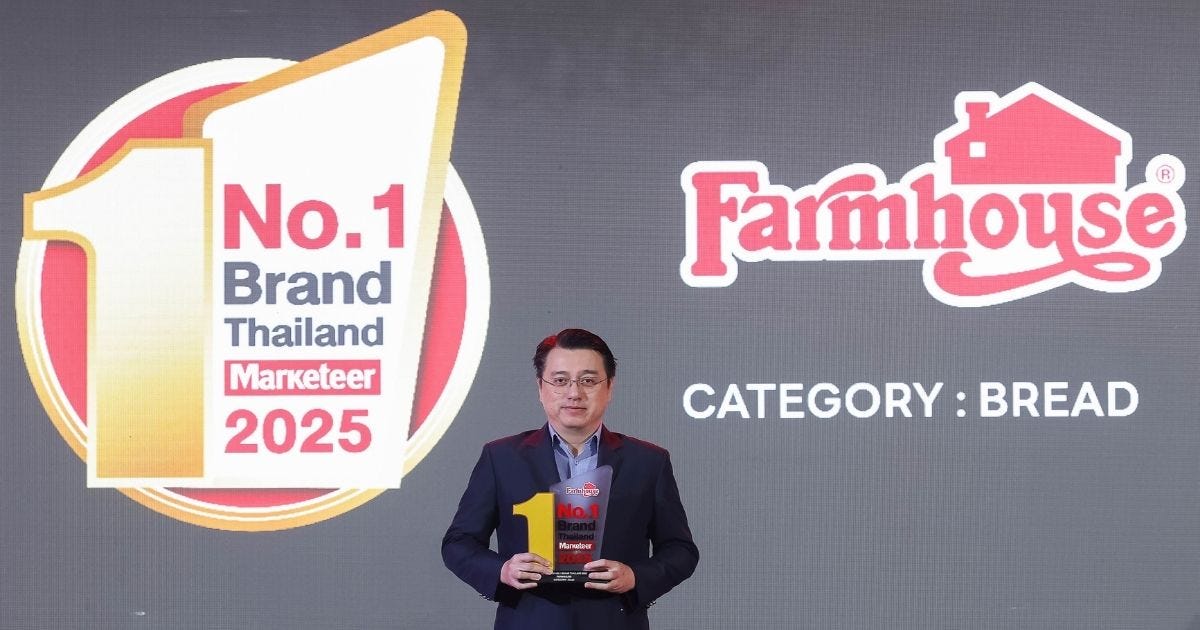
Revenue Breakdown: The Engine Room
Based on the most recent operational data, TFMAMA’s revenue is driven by three main pillars.
Revenue by Segment (Others 6%)
Instant Noodles & Semi-Finished Food (61%): This is the core engine, driven by wheat and rice-based products.
Bakery (24%): Contributed largely through President Bakery, providing a steady, daily-consumption revenue stream.
Biscuits, Fruit Juice & Packaging (9%): Includes brands like Bissin and Homey, alongside the production of packaging materials, which improves internal cost efficiency.
Geographic Reach
While Thailand remains the largest single market (accounting for roughly 75% of revenue), the export segment is the growth frontier. The largest export markets include the United States, Australia, and neighboring CLMV countries (Cambodia, Laos, Myanmar, Vietnam). The company operates overseas plants in Hungary, Bangladesh, Cambodia, and Myanmar to mitigate logistics costs and regional trade risks.
Biggest Player in Recession-Proof Sector
The instant noodle sector is often viewed as “recession-proof.” In economics, noodles are sometimes classified as inferior goods—demand tends to rise or remain flat when the economy slows, and consumers trade down from expensive meals.
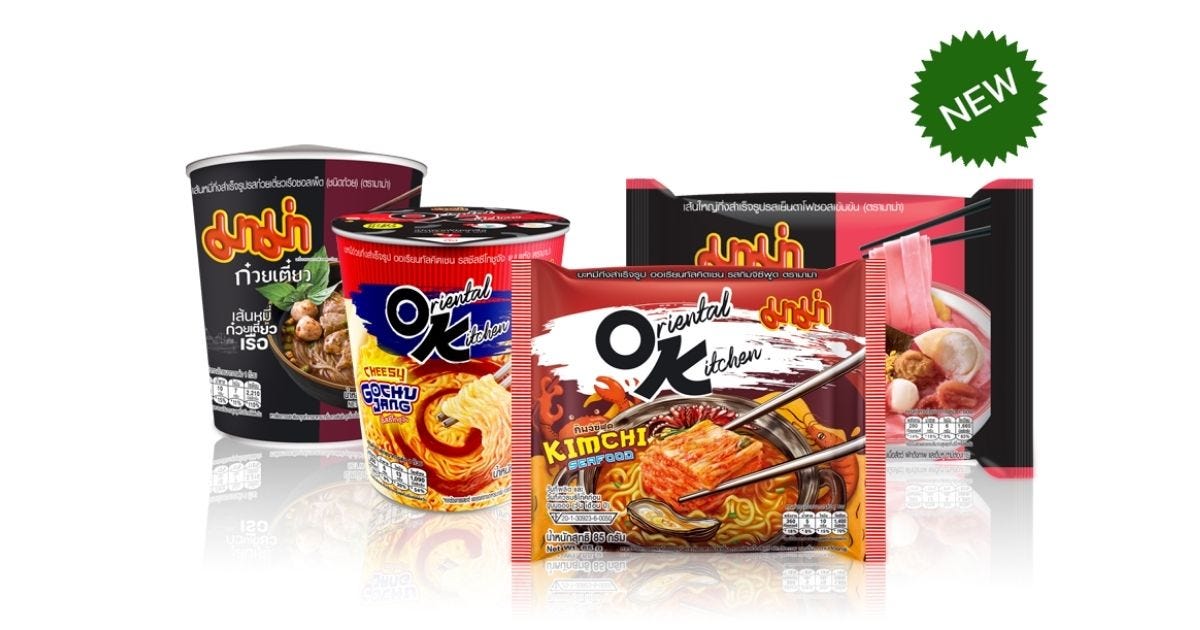
Rising raw material costs (wheat, palm oil) and packaging expenses are the primary headwinds in 2026. However, the “Silver Economy” (an aging population) is driving a shift toward premium, health-conscious options such as the MAMA OK (Oriental Kitchen) series.
Locally, TFMAMA faces competition from Thai Preserved Food Factory (Wai Wai) and Ajinomoto (Yum Yum). Globally, it competes with giants like Nissin Foods (who owns a 17%-stake in TFMAMA) and Nongshim. TFMAMA stands out for its superior distribution network in Thailand and exceptionally high net profit margins compared to pure-play manufacturing peers.
Competitive Positioning: The Scale Master
Using Porter’s Five Forces, the instant noodle industry is moderately attractive but possesses high barriers to entry.
TFMAMA utilizes a Cost Leadership strategy. Its massive scale enables significant economies of scale, and its internal packaging production keeps margins higher than competitors’. However, through the “MAMA OK” line, it is also successfully using a Differentiation strategy to capture younger, premium-paying demographics.
The industry rivalry is high, but TFMAMA’s dominant marketshare gives it “price maker” status. The threat of new entrants is low due to the massive capital required for distribution and manufacturing scale. The buyer power is high (retailers like 7-Eleven), but the brand strength of “Mama” makes it a “must-have” for any shelf.
Constraints to Growth: A Realistic Ranking
For an investor, the question isn’t “Will TFMAMA survive?” (it will), but “Can it grow and thrive?” We analyze four key constraints:
1. Market (Major Constraint): The Thai domestic market is largely saturated. With a 50-60% share, finding new domestic customers is difficult. Growth must come from international expansion or “premiumization” (charging more for better noodles).
2. Operations (Neutral): Scaling production across different continents (Hungary, Myanmar) brings geopolitical and supply chain complexity.
3. People (Minor): The company is backed by the Saha Group, one of Thailand’s most stable conglomerates, with a deep bench of experienced management.
4. Capital (Minor): With a net-cash balance sheet and over 19 billion Baht as of 3Q25 in cash and short-term investments, capital is not a constraint to growth; the challenge is finding high-return projects to deploy it.
Owning a Piece of the Thai Diet
On the one hand, TFMAMA is a world-class, cash-rich, potentially recession-proof business in a monopoly-like position. On the other hand, it’s a mature industry, and instant noodles and white bread may not be considered the healthiest of foods. Low trading volume also poses a risk.
What do you think about TFMAMA? How would it fit in your investment portfolio?