

คลิกเพื่ออ่านบทความฉบับภาษาไทย
CGR stands for the Corporate Governance Report of Thai-listed companies. In plain terms, CGR means an annual, independent assessment of how well SET- and mai-listed companies are governed. It’s conducted by the Thai Institute of Directors (IOD), with support from the Stock Exchange of Thailand (SET). The CGR 2025 assessment covered 844 listed companies against 173 criteria.
Why it matters to shareholders
The CGR exists to protect shareholders. It’s designed to catch the governance failures that most often destroy value: unfair treatment in voting or dividends, weak stakeholder relations, poor disclosure, or a board that isn’t doing its job. A strong score signals a company has cleared this baseline; a weak one is worth investigating further or maybe avoiding altogether.
How the score actually gets calculated
1. Rights and equitable treatment of shareholders (25%)
2. Role of stakeholders in business sustainability (25%)
3. Disclosure and transparency (15%)
4. Board responsibilities (35%)
Every score is assigned by an independent third party, the IOD, based on what the company has disclosed publicly. It is not a self-assessment, but the company still provides all the underlying material.
The IOD discloses the total number of criteria, 173 for 2025. What it doesn’t publish is the full methodology. The report walks through a handful of example questions to show how a bonus or penalty affects a score, but the complete set of 173 questions stays private. That makes it harder for companies to write disclosures aimed at the checklist rather than the substance behind it.
Each weighted score maps to a recognition level, shown as a logo count from the National Corporate Governance Committee. Only companies scoring 70 and above are named publicly; scores below that are reported only in aggregate.


How Thai-listed companies scored on CGR in 2025
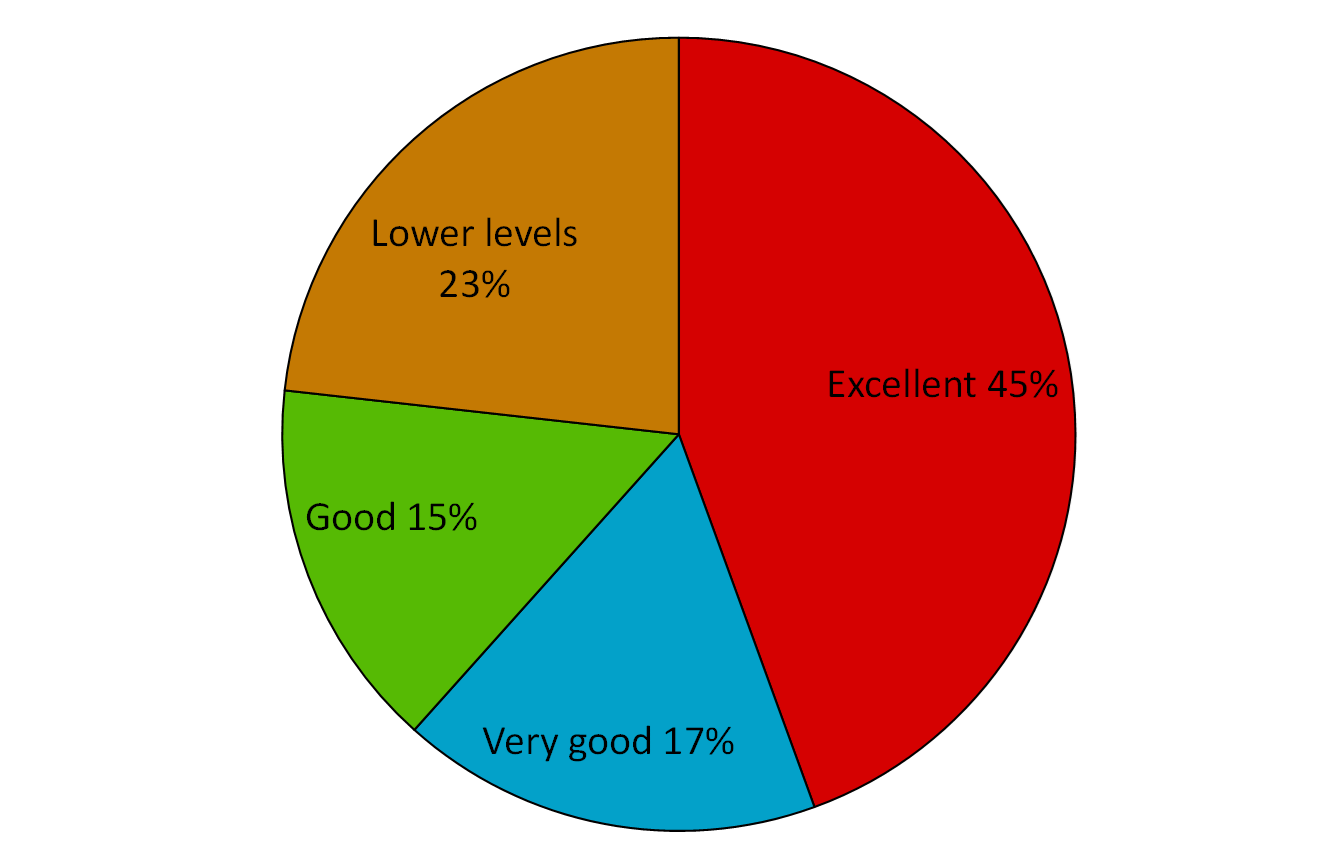
Of the 844 companies assessed in 2025, 44% earned an Excellent rating, the largest single group.
Overall performance of 844 companies by Corporate Governance recognition level
Sources: A. Stotz Investment Research, Thai Institute of Directors, Corporate Governance Report of Thai Listed Companies 2025
The biggest Thai companies also score the best on CGR
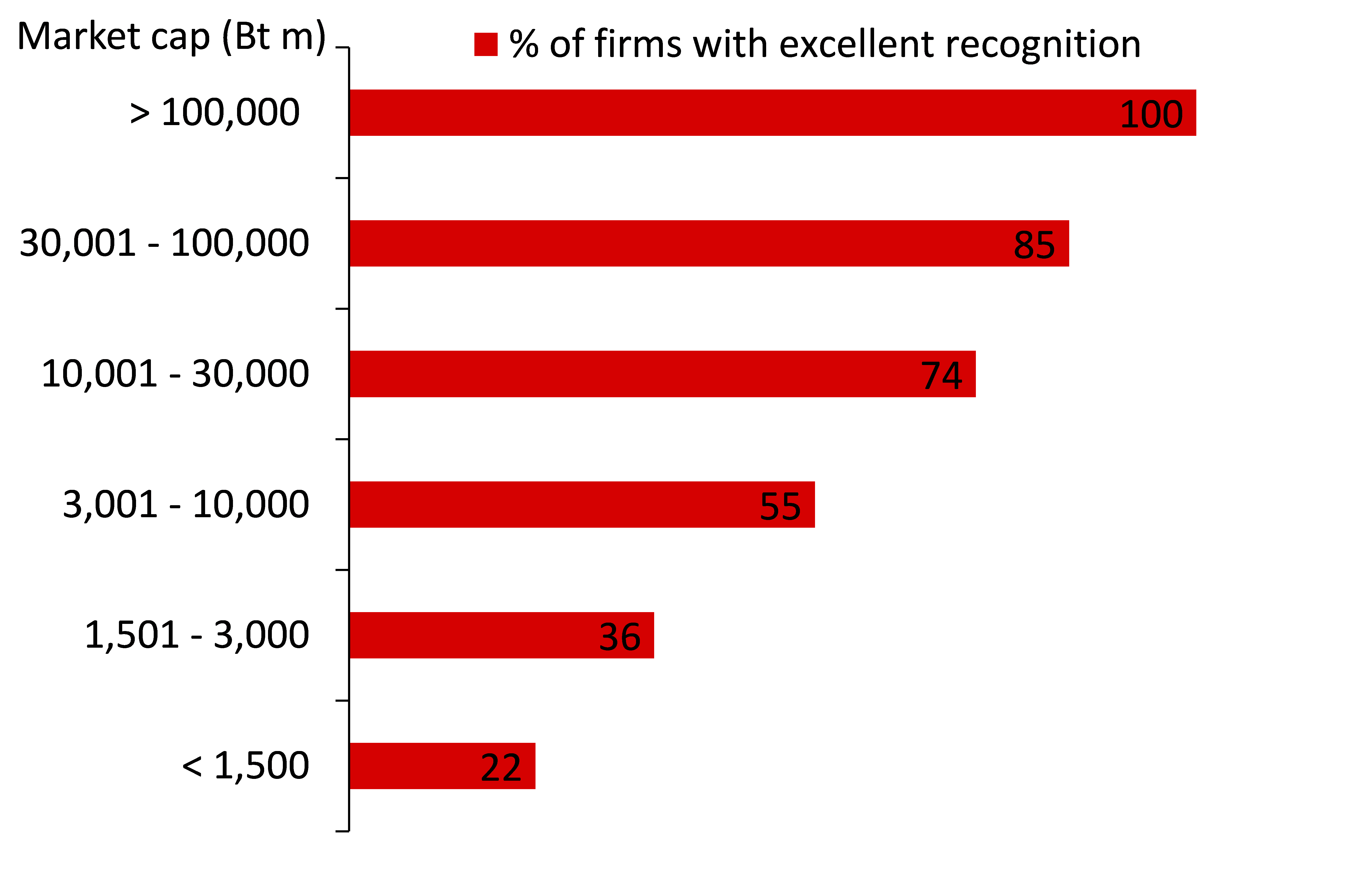
Company size is also a factor. Every company with a market cap above Bt100,000m earned an excellent rating in 2025. That share declines steadily as market cap decreases, down to 22% among companies with market caps under Bt1,500m.
Larger companies tend to score more favorably
Sources: A. Stotz Investment Research, Thai Institute of Directors, Corporate Governance Report of Thai Listed Companies 2025
Company names are published for scores of 70 and above
It’s worth knowing which scores you can actually see.
The IOD publishes aggregate figures across all six recognition groups, but only companies scoring 70 or above (“Good,” “Very Good,” or “Excellent”) are individually named. Companies scoring below that receive a private scorecard rather than a public listing.
CGR scores can open the door to Thai ESG Securities
CGR also factors into SET’s Thai ESG Securities list. Inclusion matters because it determines eligibility for Thai ESG and Thai ESG Extra funds. One qualifying route requires an excellent rating (90 or above) plus a disclosed Corporate Value Up or JUMP+ plan. Alternative routes include obtaining a SET ESG Rating or disclosing greenhouse gas emissions.
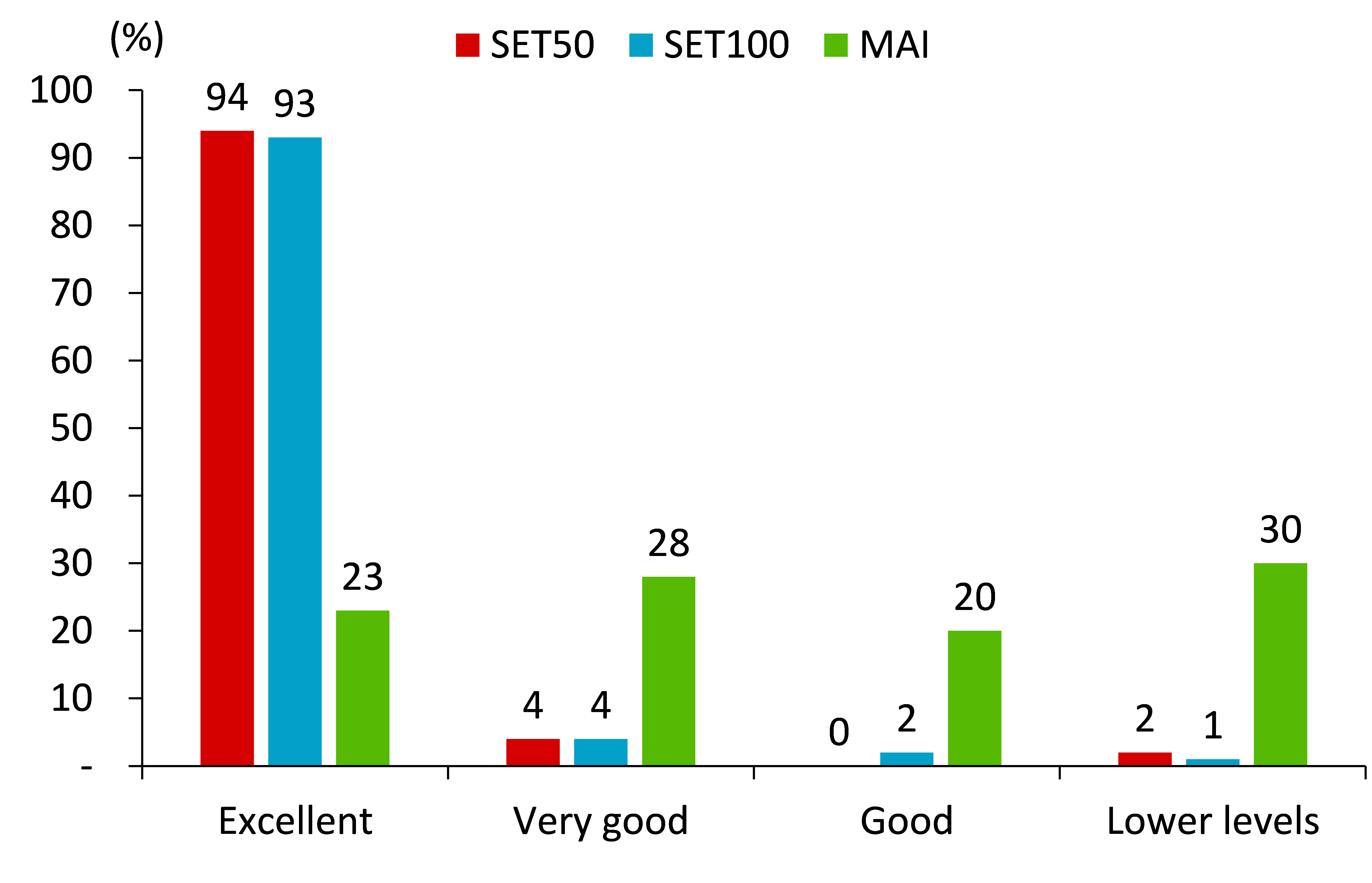
Excellent ratings concentrate among larger, index-member companies, so this route is more attainable for SET50 and SET100 constituents than for mai-listed companies.
Blue Chips dominate the top tier
Sources: A. Stotz Investment Research, Thai Institute of Directors, Corporate Governance Report of Thai Listed Companies 2025
What a CGR score won’t tell you
A high CGR score reflects disclosure quality and governance structure, not financial performance or valuation.
It should not be treated as a standalone signal, but rather as one input for due diligence on a Thai-listed company.